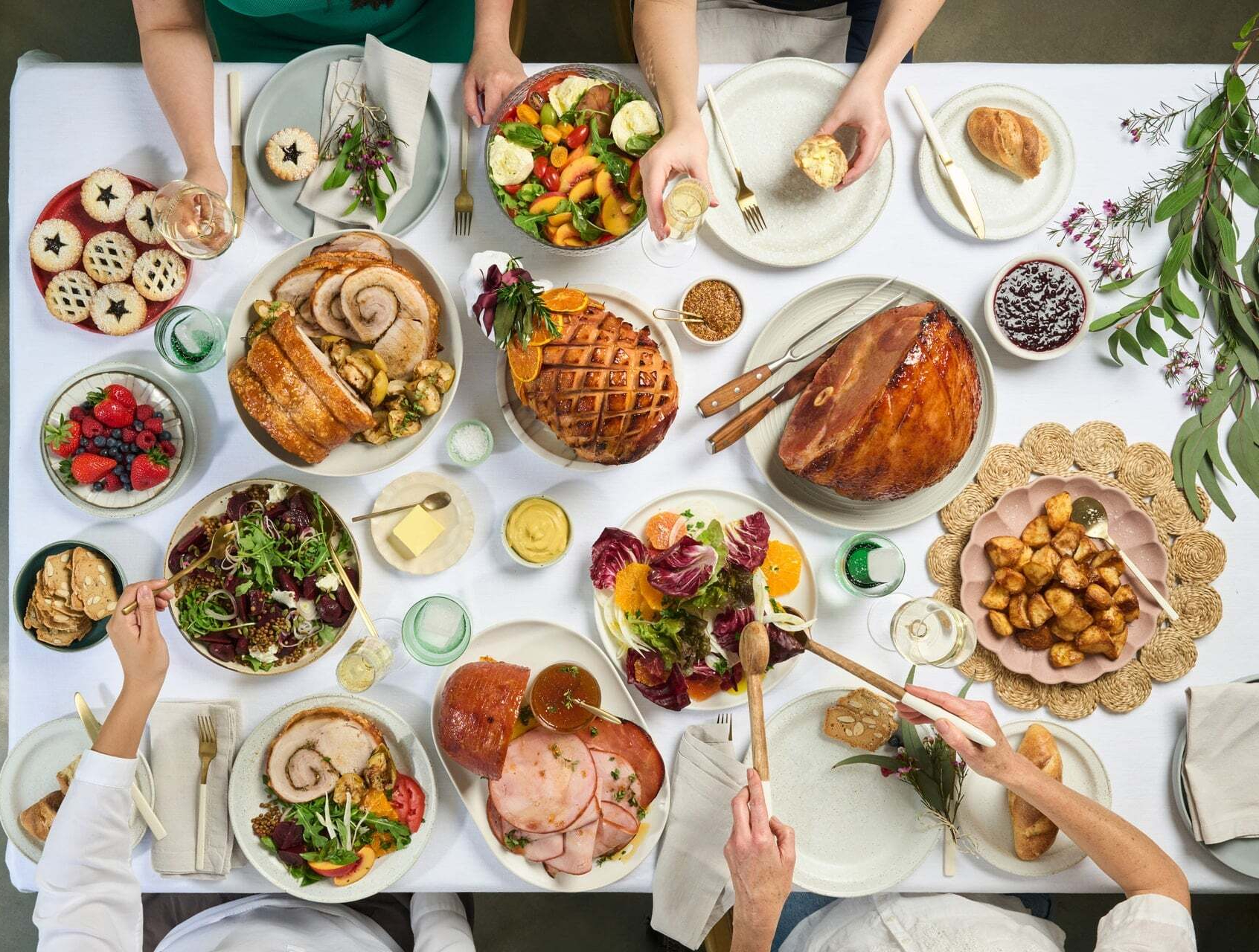
Christmas should be about enjoying time with family and friends, not spending the day watching the oven. Choosing a centrepiece, however, can feel like a trade-off between serving something impressive or something that’s easy to cook without the stress.
So, what’s the best pork cut for Christmas? For a stress-free Christmas roast, boneless pork shoulder is our top pick. Slow roasting brings out the best in pork shoulder, allowing its natural fat to melt into the meat for a tender, juicy and flavourful result.
As an added bonus, most of the preparation can be done the day before, leaving you more time to enjoy Christmas Day.
What Makes a Christmas Roast Stress-Free?
A stress-free Christmas roast is one that gives you a little breathing room. Whether you’re juggling side dishes, waiting for guests to arrive or simply enjoying the day, having some flexibility makes all the difference.
When choosing your roast, look for a cut that offers three things:
- Forgiving cooking time: A cut that stays moist and tender even if it spends a little longer in the oven than planned.
- Minimal attention: A roast cook without needing constant checking, basting or adjustments.
- Easy preparation: Something you can season and prepare the day before, then keep refrigerated until it’s time to cook.
Leaner pork cuts, such as loin and leg, can make beautiful Christmas roasts, although they need a bit more care to avoid overcooking. A cut that takes longer to cook can often be the easier choice, leaving you more time to enjoy the day.
Why Boneless Pork Shoulder Is a Great Pork Cut for Christmas
One of the reasons pork shoulder works so well for a Christmas roast is its balance of flavour, tenderness and flexibility. If lunch runs later than expected or the side dishes need more time, shoulder is generally more forgiving than a leaner roast.
Pork shoulder contains more natural fat and connective tissue that break down during slow roasting, helping create beautifully tender, juicy meat with plenty of flavour.
Pork shoulder does take several hours to cook, as it needs time to become tender. The upside is that much of this time is hands-off. Once your roast is seasoned and in the oven, you can focus on preparing the sides, welcoming guests and enjoying the day, with just the occasional check on your roast.
For inspiration, Linley Valley Pork’s Barbecue Roasted Pork Shoulder recipe shows just how manageable a Christmas roast can be. Using a 1.2 kg boneless rolled shoulder, the recipe takes five minutes to prepare and three hours of cooking to serve eight people. For beautifully crisp crackling, dry the rind overnight before cooking with a few minor heat adjustments along the way.
Looking for something easier? Linley Valley Pork’s Boned and Rolled Shoulder Roast is already prepared and ready for roasting or slow cooking. Simply season, pop it in the oven and let the slow cooking bring out its natural tenderness and flavour.
Can You Get Great Crackling Without the Stress?
Crispy crackling is often one of the highlights of a Christmas pork roast, and pork shoulder is an excellent cut for achieving that delicious combination of tender, juicy meat and crunchy crackle. .
The secret to crispy crackle comes down to moisture, fat and heat. As the pork roasts, the fat beneath the rind slowly renders, while dry skin blisters in the heat to create golden, crunchy crackling. Keeping moisture away from the rind is key; excess moisture creates steam, leaving the skin soft rather than crisp.
If crackling is a must-have on your Christmas table, make sure your pork shoulder roast has the rind attached, as some boneless roasts are sold with the rind removed.
For the best results, focus on thoroughly drying the rind, scoring it carefully and carefully following the right oven temperatures. For more tips, check out our guide on how to get good pork crackling.
What About Pork Loin, Leg and Belly?
While pork shoulder is a great choice for a relaxed Christmas roast, there are plenty of other pork cuts that can make a delicious centrepiece. The right choice comes down to the kind of roast you’re after.
- Pork loin: A leaner option that’s ideal for a traditional roast with beautifully tender, easy-to-carve slices. Linley Valley Pork’s Rind On Loin Roast is a perfect option for golden, crispy crackling. As it is a leaner cut, keeping an eye on cooking time helps maintain its juiciness.
- Pork leg: This is a classic Christmas centrepiece, especially if you enjoy generous slices of tender pork and crispy crackling. A boned and rolled leg roast with the rind attached makes it an excellent Christmas centrepiece. Use a meat thermometer to help avoid overcooking.
- Pork belly: The perfect cut if rich, tender meat and generous crackling are your priorities. Its generous layers of fat makes it well suited to roasting and for crackling, although getting the rind perfectly crisp will need closer attention to moisture and heat.
Each cut brings something different to the Christmas table. If flexibility and a little more breathing room in the kitchen are high on your list, pork shoulder is still a great option to consider.
Make It Even Easier: Prep-Ahead Tips
A little preparation the day before can save you time on Christmas Day. These few simple steps will help you get ahead:
- Dry the skin overnight: Pat the rind dry with a paper towel and leave the pork uncovered on a tray in the fridge overnight, safely separated from other foods. This helps remove moisture for crispier crackling.
- Season ahead of time: Prepare your favourite herb or spice rub the day before and refrigerate the pork. If you’re aiming for crackling, keep the rind dry rather than covering it with a wet marinade.
- Be careful with sweet glazes: If you’re using honey or a sugary barbecue glaze, add it later in cooking or serve it alongside the roast. Sugar can burn under the high heat used for crackling.
- Plan your cooking time: Check the recipe for your roast’s weight and allow time for resting before serving. Keep the pork refrigerated until you’re ready to cook, rather than leaving it on the bench for an extended period.
Once your shoulder roast is in the oven, check on it occasionally and make any heat adjustments recommended in your recipe. That leaves you free to turn your attention to the sides, welcome guests and enjoy the day.
When it is ready, allow the meat time to rest before carving or serving to keep it juicy and tender. If you are serving up crackling, keeping the crackling uncovered while resting will help to preserve its crunch.
A Stress-Free Christmas Starts With the Right Cut
Choosing the right Christmas roast isn’t just about cooking time. With its naturally rich flavour, tender texture, and the option to prepare the rind ahead of time, boneless pork shoulder delivers an impressive Christmas centrepiece without needing constant attention.
With tender meat, golden crackling and a little time to rest before serving, it’s still a roast worth gathering around.
If pork shoulder sounds like the right fit for your Christmas table, explore Linley Valley Pork’s Boned and Rolled Shoulder Roast. For more tips, take a look at our pork cooking guide to help get your roast just right.